Automotive Protection Hub

Custom Golf Cart Cover Design Case Study: From Client Specifications to a Ground-Reaching Fit
A golf cart cover may appear to be a straightforward product, but a reliable custom fit depends on the information collected before production begins. In this project, JK Covers moved from client specifications and reference photos to a digital template, then to a black outdoor cover designed to fit the cart and extend completely to the ground.
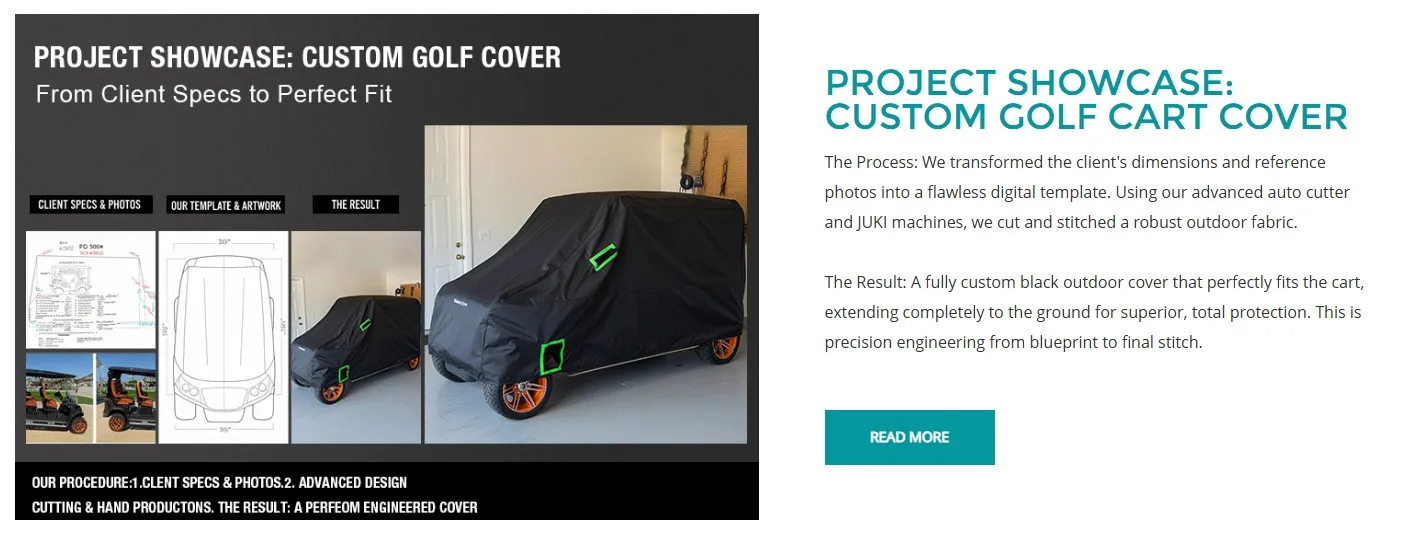
The Starting Point: Client Specifications and Reference Photos
The project began with information supplied by the client. The case materials show vehicle specifications, reference photographs, and dimensional drawings being used as the foundation for development. These inputs help the design team understand the cart’s overall proportions and identify the areas that will influence the final cover shape.
For a golf cart, the design brief should address more than overall length and width. The roofline, windshield, front profile, seat or passenger area, steering position, wheel locations, rear structure, and any accessories can change the way a cover needs to be shaped. Clear photos from several angles make these relationships easier to review before a pattern is prepared.
A specification-led process also gives buyers a more useful way to communicate what “fit” means for the project. The intended coverage boundary, the preferred lower edge, the use environment, and any access requirements should be discussed before cutting begins. Exact dimensions and project-specific requirements must be confirmed for each individual vehicle.
Why a Golf Cart Needs More Than a Generic Cover
Universal covers are designed around a general size range. A custom cover begins with the actual vehicle profile. This difference matters when the cart has a distinctive roof shape, a non-standard front section, exposed wheels, a raised rear area, or accessories that change the outer silhouette.
The project result shown in the supplied case image is a black outdoor cover that follows the cart’s structure and extends to the ground. A ground-reaching edge creates a more complete visual enclosure, but it also requires the pattern to account for the cart’s complete height, width, wheel positions, and lower perimeter. If these elements are not considered together, the cover may pull unevenly, leave openings, or sit too far away from the vehicle.

Building the Digital Template
Once the client’s information was reviewed, JK Covers transformed the references into a digital template. The template provides a structured representation of the cover sections before the fabric is cut. It helps the team consider how the front, roof, side, and rear sections will connect and where seams can follow the cart’s natural changes in form.
JK Covers’ OEM service information describes a custom workflow based on drawings, dimensions, and reference photos, supported by digital templating, automated cutting, and professional stitching. Its vehicle measurement recording system also provides a structured approach for identifying measurement points and recording vehicle data. Together, these processes help reduce the gap between a buyer’s reference material and the production pattern.

A useful digital template must describe more than a two-dimensional outline. It should support the three-dimensional relationship between the cart and its cover. The front slope, windshield area, roof, side surfaces, rear profile, wheel clearance, and lower hem all have to work together. The better these relationships are defined at the template stage, the easier it becomes to review the intended fit before production.
Preparing the Outdoor Fabric for Production
The case image identifies a robust outdoor fabric as part of the project process. The fabric choice is connected to the intended application, but the exact composition, weight, finish, and performance requirements should always be confirmed for the specific order rather than assumed from a project image.
After the digital template is prepared, the pattern sections can be arranged for cutting. This stage converts the digital design into physical pieces that can be aligned and assembled. Efficient pattern placement can also support material management, while controlled cutting helps the production team maintain the intended geometry of each section.
Automated Cutting and JUKI Stitching
The project materials identify an advanced auto cutter and JUKI machines as part of the production process. Automated cutting prepares the fabric according to the developed pattern, while professional stitching joins the sections and gives the cover its final three-dimensional structure.
For a full golf cart cover, stitching has to support both the visual appearance and the fit relationship. Seams divide the cover into manageable sections, but they also influence how the material turns around the roof, front, sides, rear, and lower edge. A controlled construction process helps keep the finished cover connected to the original template instead of becoming a loose, generic shell.
The Result: A Black Cover That Reaches the Ground
The final project result is described as a fully custom black outdoor cover that fits the cart and extends completely to the ground. The ground-reaching coverage gives the cover a more complete profile and creates a clear visual distinction from a short or loosely draped cover.
The result also shows why the project must be treated as a connected engineering process. The finished cover is not only the result of a sewing step. It reflects the quality of the original specifications, the interpretation of the vehicle references, the digital template, the cutting layout, and the construction method used during stitching.

A complete lower edge can also make the cover more visually consistent when the cart is stored or displayed. However, the exact lower clearance, wheel treatment, openings, closures, and access features depend on the individual cart and the buyer’s intended application. They should be confirmed during the project review process.
What Buyers Should Prepare for a Similar Project
Buyers planning a custom golf cart cover can improve the design process by preparing a clear project package. Recommended information may include:
- Vehicle specifications and available dimensional drawings;
- Clear reference photos from the front, sides, rear, and elevated angles;
- Roof, windshield, wheel, seat, rear, and accessory details;
- The desired coverage boundary and lower-edge position;
- The intended indoor, outdoor, storage, transport, or display environment;
- Preferred color, finish, branding, packaging, and labeling requirements;
- Sample review, inspection, and approval expectations.
Exact material specifications, quantity, minimum order requirements, price, testing, certification, and lead time are project variables. They should be discussed and confirmed with the manufacturer before production is approved.
From Client Brief to Final Stitch
This custom golf cart cover project demonstrates how a clear brief can guide a specialized protective-cover workflow. Client specifications and reference photos provide the starting point. Digital templating organizes the design, automated cutting prepares the material, and JUKI stitching brings the pattern together as a finished cover.
The final black outdoor cover, extending completely to the ground, reflects the project’s central objective: create a protective cover that is shaped around the actual cart rather than selected from a general size range. For buyers developing a similar product, the most important early step is to provide accurate references and define the intended coverage before the design enters production.
Start a Custom Golf Cart Cover Discussion with JK Covers
Explore JK Covers custom covers, review the JK Covers OEM Service, or use the vehicle measurement process as a starting point for your next custom golf cart cover project.
Project Confirmation Points
For a similar golf cart cover project, the development brief can define the roofline, windshield, wheel positions, lower perimeter, openings, closures and intended ground clearance. Sample scope, fit review points and approval criteria can be confirmed for each project before production.
Start an OEM/ODM Cover Project
Have a vehicle or equipment project with specific dimensions, materials or branding requirements? Send us your specifications, reference photos and project requirements for review.
0users like this.