Interior Comfort & Pet Travel

Heat Insulation for Camper Vans: Staying Cool with Reflective Interior Covers
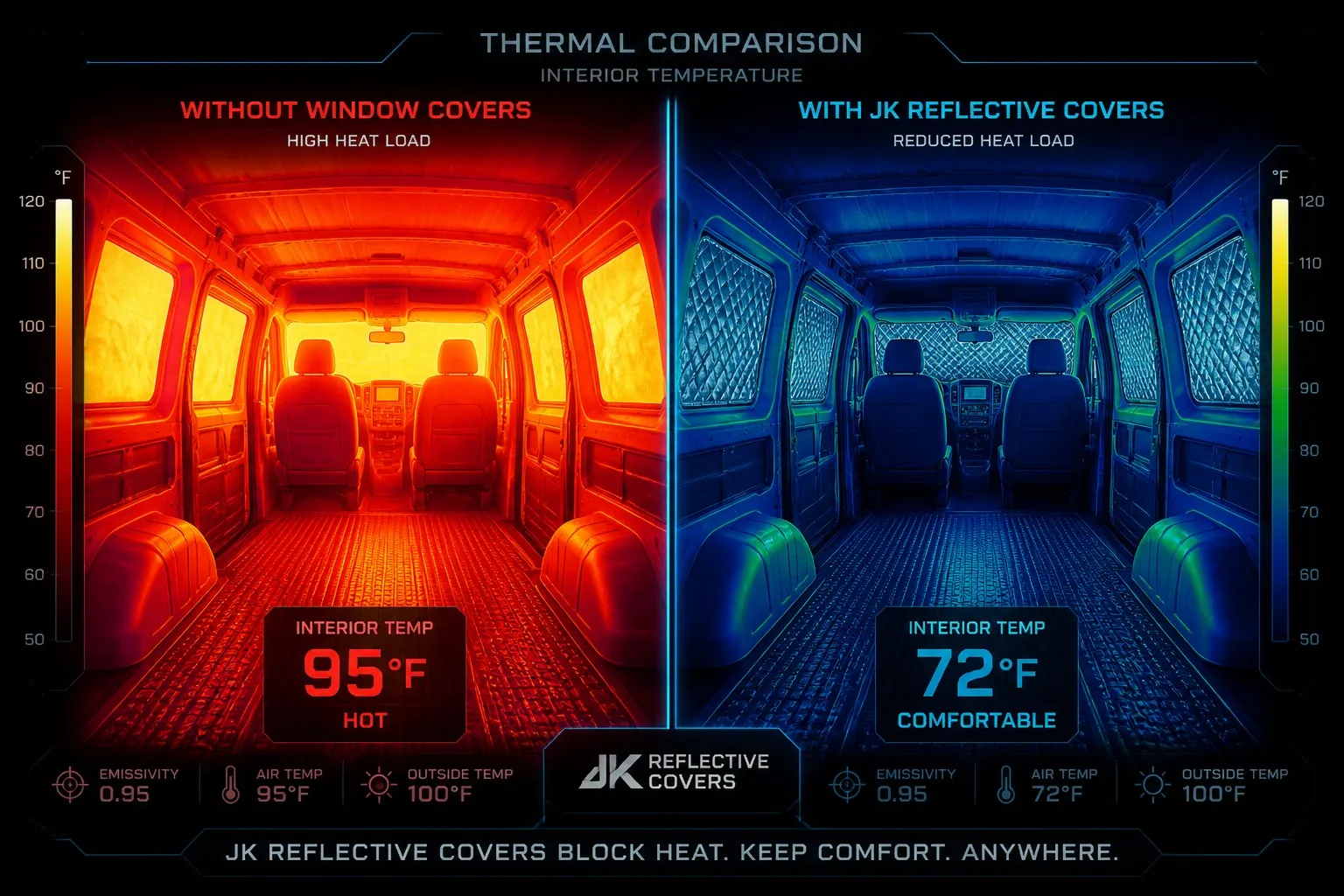
Heat Insulation for Camper Vans: Staying Cool with Reflective Interior Covers
Anyone who has spent a summer night in a camper van knows that metal boxes are excellent at absorbing and retaining heat. Without proper insulation, a van can quickly become an oven, reaching temperatures 20-30 degrees higher than the outside air. While many builders focus on wall insulation, the largest source of heat entry is often overlooked: the windows. This is where reflective interior covers become a game-changer for summer travel comfort.
How Solar Gain Works in a Van
Windows are the weakest point in any vehicle's thermal envelope. Standard automotive glass provides almost zero resistance to infrared radiation (heat). As sunlight hits the glass, the energy passes through and is absorbed by the dashboard, seats, and floor. These surfaces then radiate that heat back into the air—a phenomenon known as "solar gain."
The Reflective Advantage
Passive insulation (like wool or foam in the walls) only slows down heat transfer. Active reflection, however, stops the energy before it enters the cabin. JK Reflective Covers use a specialized aluminum-poly layer that reflects up to 97% of radiant heat back through the glass.
The Science of Triple-Layer Thermal Defense
Not all reflective covers are created equal. Many "bubble-wrap" style shades fail because they lack the density to stop conductive heat. Our covers utilize a three-stage barrier system:
- Reflective Skin: A vacuum-metallized film that reflects solar radiation.
- Closed-Cell Core: A high-density foam layer that prevents the heat that does get past the skin from reaching the interior air.
- Polyester Backing: A soft, durable layer that adds structural integrity and provides a clean, interior finish.
Performance Data: The Temperature Drop
In real-world testing (100°F ambient temperature), a van with unprotected windows reached an interior temperature of 124°F within two hours. With JK Custom Reflective Covers installed on all windows, the interior remained at 82°F—a massive 42-degree difference.
| Protection Setup | Interior Temp (after 2 hrs) | AC Energy Required |
|---|---|---|
| No Window Covers | 124°F | Max Load (Constant) |
| Standard Curtains | 108°F | High Load |
| JK Reflective Covers | 82°F | Eco/Low Load |
Extending Battery Life in Electric/Hybrid Vans
For owners of modern e-vans or hybrid campers, heat management is about more than comfort—it's about range. Running a rooftop AC unit or a 12V fan consumes significant battery power. By reducing the ambient temperature of the van by 30+ degrees using passive reflective covers, you drastically reduce the load on your climate control system. This preservation of battery capacity translates directly into more miles on the road and more nights of off-grid camping.
Best Practices for Summer Travel
- Cover Early: Install your covers before the sun hits the window. Once the interior surfaces are hot, the covers will only help retain that heat.
- All-Window Coverage: Don't just cover the windshield. The side and rear windows contribute significant heat gain.
- Ventilation Synergy: Pair your window covers with a roof fan set to "exhaust" to pull any rising warm air out of the van.
Conclusion
Reflective interior covers are the most cost-effective "AC upgrade" you can buy for your van. By utilizing the principles of fabric science and thermal reflection, JK Covers allows you to chase the summer sun without sacrificing your comfort or your vehicle's interior health.
0users like this.