The Protection Lab (Expert Insights)

Oxford vs PEVA vs Non-Woven: The Ultimate Material Showdown
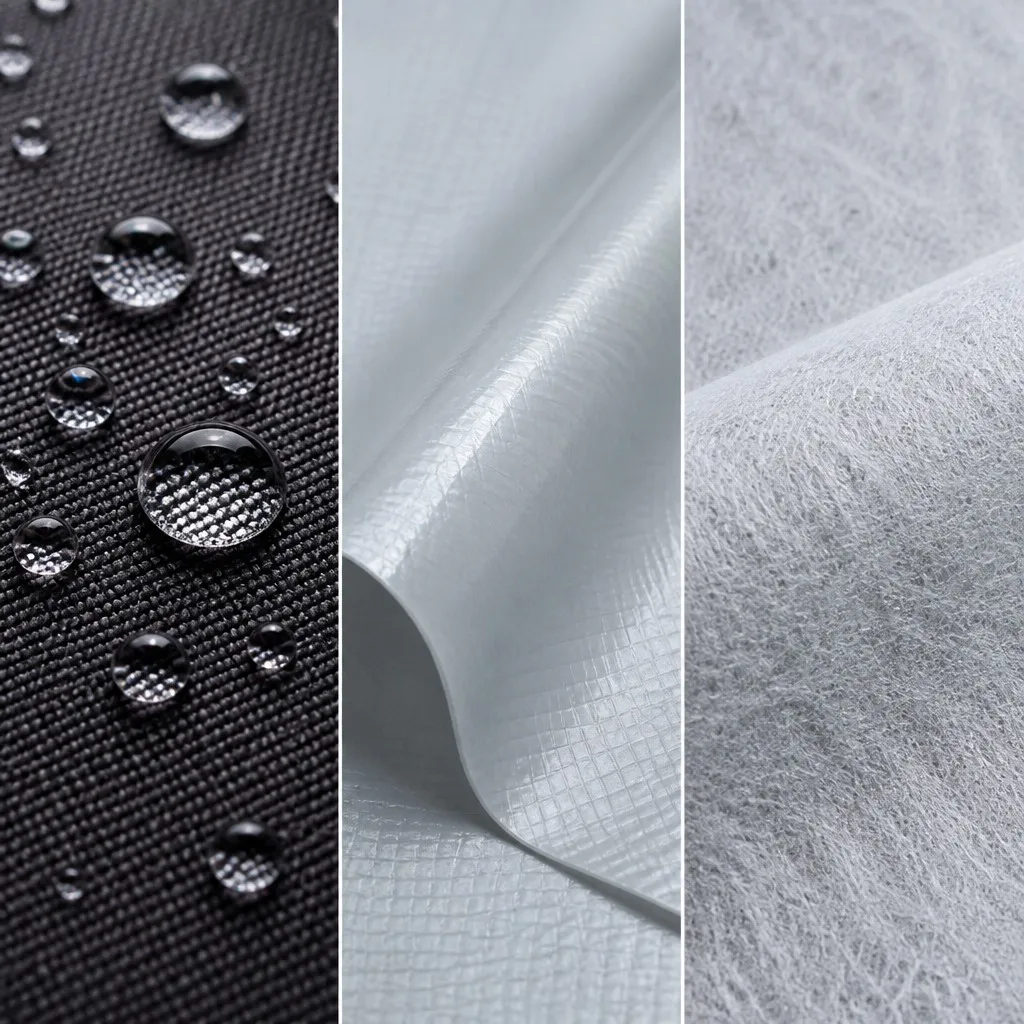
Three Materials, Three Philosophies of Protection
Every cover on the market is built from one of three families of material: woven Oxford polyester, PEVA film, or non-woven polypropylene. Each solves a different problem, and each has a legitimate place in the product lineup. The mistake consumers make — and sometimes manufacturers, too — is assuming one material can do everything. As a full-spectrum manufacturer, JK Covers produces all three, so our advice comes from testing, not marketing.
Oxford Polyester: The All-Weather Professional
Oxford is a woven fabric: polyester yarns interlaced in a basket-weave pattern, typically 300D to 900D, finished with a waterproof coating. Because the strength comes from the weave itself, Oxford delivers the highest tear resistance, the best UV stability, and the longest service life of the three families. It is the only one of the three that can be engineered for true multi-season outdoor duty.
- Waterproofness: Excellent, with coated Oxford routinely passing 3,000-5,000mm hydrostatic head tests.
- Breathability: Manageable through vents and breathable coated variants — critical for mold prevention. See [Link to Article 60: Breathability vs Waterproofness].
- UV resistance: Strong, especially with solution-dyed yarns and UV stabilizers.
- Best for: Vehicles, boats, furniture, grills, and any asset stored outdoors year-round.
PEVA: The Lightweight Water Barrier
PEVA (polyethylene vinyl acetate) is a soft, flexible polymer film — the modern, less-toxic cousin of PVC. Covers made from PEVA are essentially sheeted film: fully waterproof, feather-light, and inexpensive. That makes them excellent for short-term protection where water is the only enemy and durability is secondary.
But PEVA has real limitations that buyers should understand:
- No breathability: PEVA traps condensation completely, making it a mold risk for long-term storage of porous items.
- Limited UV life: Film polymers degrade faster than woven polyester under intense sun; expect cracking and stiffening within a season or two.
- Low tear strength: A single snag can propagate into a large rip because there is no weave to stop it.
- Best for: Patio furniture through a single rainy season, luggage covers, and temporary shielding.
Non-Woven: The Scratch-Free Softie
Non-woven polypropylene (spunbond fabric) is produced by bonding fibers together without weaving — the same technology family as Tyvek. It is soft, pliable, and completely non-abrasive, which makes it the preferred material for indoor dust protection where the goal is keeping dust and light off a surface, not stopping rain.
- Scratch protection: Superior — the soft fiber surface will never micro-scratch a paint finish, which is why premium car showrooms use non-woven liners.
- Breathability: Excellent, because the fabric is porous — no condensation, no mold.
- Waterproofness: Negligible. Non-woven is water-resistant at best and soaks through under sustained rain.
- UV resistance: Poor to fair; fibers weaken with prolonged sun exposure.
- Best for: Indoor car covers, furniture dust covers, electronics, and shipping protection. See [Link to Article 58: The Spandex 'Second Skin'] for the premium evolution of showroom protection.
The Head-to-Head Verdict
- Outdoor, year-round: Oxford, without question.
- Short-term rain protection on a budget: PEVA.
- Indoor dust and scratch protection: Non-woven.
- Mixed duty: Many JK Covers products combine them — a non-woven soft inner liner with an Oxford waterproof shell delivers both scratch safety and weather resistance.
Cost per Season: The Financial Reality
Price-per-unit tells only half the story; the number that matters is cost per season of service. A $10 PEVA furniture cover that cracks after one summer of UV exposure costs $10 per season. A $35 600D Oxford cover that survives five years costs $7 per season — and protects better while it works. Non-woven indoor covers occupy their own niche: a $15 dust cover that never touches rain can last a decade indoors. When we present wholesale pricing to retailers, we encourage them to label covers by both price and expected service life, because customers who feel deceived by a failed "bargain" cover rarely return to the same brand. Material choice is ultimately a business decision about repeat customers, not just unit margin.
Why Material Selection Is a Manufacturer's Responsibility
Choosing the wrong material is the single largest cause of cover failure and customer dissatisfaction — a cover that disintegrates after one winter, or a "waterproof" cover that sweats mold onto the vehicle underneath. As an OEM/ODM partner, JK Covers treats material selection as an engineering decision backed by lab testing: tear strength, hydrostatic head, colorfastness, and UV aging. If you are sourcing covers for your brand, ask us for a material recommendation — the answer depends on where the product will live. And beware of suppliers who blur the lines: a "PEVA-coated Oxford" label may describe a thin film over a flimsy base, neither of which matches a genuine 600D woven product. Honest material naming is the first quality control checkpoint in any cover specification.
Building a cover product line? JK Covers manufactures Oxford, PEVA, and non-woven solutions to your exact specification. Contact us for wholesale and OEM pricing.
0users like this.