Marine & Watercraft Gear

Saltwater Corrosion: How Marine-Grade Fabrics Save Your Engine and Paint
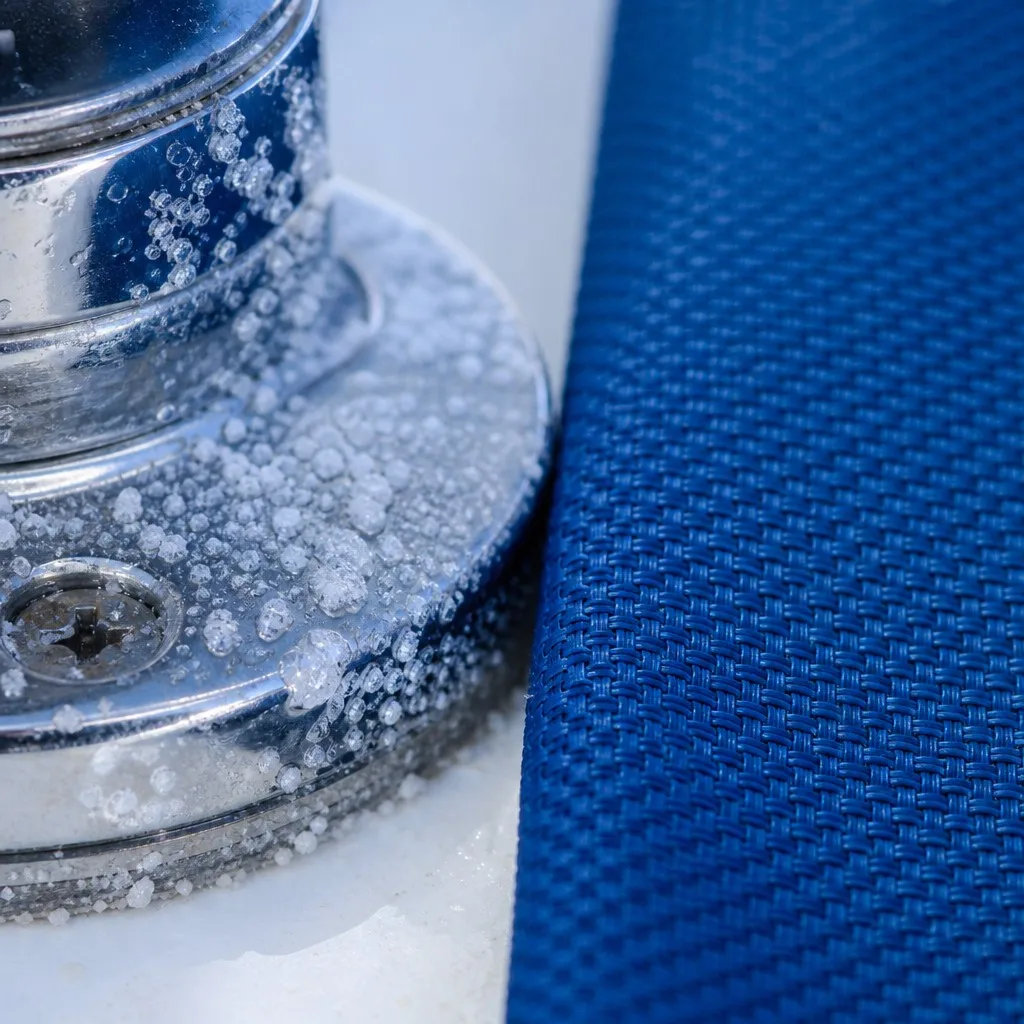
Salt Is a Slow, Relentless Engine
Boats do not wear out from use. They wear out from salt. Even after the trailer leaves the ramp, the boat carries a film of salt on every surface — and salt does not stop working when you do. It pulls moisture from the air, drives corrosion under paint, attacks electrical connections, and turns bright hardware dull within months. For owners and OEM brands alike, the fight against corrosion is fought on two fronts: the boat's materials and the physical barrier between the boat and the atmosphere. A marine-grade cover is that barrier. At JK Covers, we engineer fabrics for this battle — here is how salt attacks and how the right fabric stops it.
How Corrosion Actually Works
Corrosion is an electrochemical reaction: metal gives up electrons to oxygen, and water or salt accelerates it dramatically. Saltwater is an electrolyte — it conducts the reaction far more efficiently than freshwater, which is why a boat stored near the coast corrodes faster than one inland, even if it never touches the water. Add galvanic corrosion — two different metals in contact (aluminum and stainless, for example) form a battery in salt-laden moisture — and you have damage in places you never see: behind rub rails, inside engine blocks, and under terminals. The enemy is not the single rainstorm; it is the endless cycle of dampness, salt residue, and exposure.
Where Salt Attacks First
Gelcoat and paint blister and lose gloss as salt draws moisture through microscopic pores. Chrome and stainless hardware pit and streak. Engine blocks, outdrives, and jet pump housings corrode internally where moisture condenses. Electrical connectors fail at the worst moment as oxide builds between terminals. Vinyl and rubber degrade faster in salt air, drying and cracking. Most owners discover the damage a season too late — when a deck fitting crumbles or a trim cylinder seizes.
The Cover as the First Line of Defense
Every corrosion mechanism above requires one ingredient: moisture. A properly fitted marine cover stops the daily deposition of salt spray, dew, and rain at the source. It keeps the surface dry, and a dry surface cannot corrode. But the cover must be engineered for the job — a cheap tarp traps humidity underneath, creating a greenhouse that accelerates corrosion. That is why marine-grade covers are built differently, and why fabric selection is a corrosion-control decision, not just a weather decision.
Fabric Science: What 'Marine-Grade' Really Means
When we label a fabric marine-grade, we mean specific, testable properties. UV-stabilized yarns — unstabilized polyester loses strength quickly in coastal sun. Waterproof coatings, PU or PVC, applied with enough thickness to pass hydrostatic head testing — see [Link to Article 57: PU vs PVC Coatings] for how we verify the barrier. Mildew-resistant treatment on the backing so the humid underside never becomes a spore farm. Marine-grade thread and double-stitched, tape-sealed seams so the fabric's weakest points — the needle holes — stay protected. And denier matched to duty: 600D Oxford for routine coastal mooring, 900D Oxford for full-time exposed storage in high-salt regions. See [Link to Article 55: 600D vs 900D Oxford Fabric] for the direct comparison.
Breathability: The Saltwater Paradox
The boat needs to stay dry, but the cover must breathe. Seal the boat completely and condensation forms under the fabric every time the temperature drops — loaded with whatever salt was already on the surfaces. The answer is engineered ventilation: vents placed to let humid air escape while keeping rain out. This is one of the most common specification errors we correct for OEM clients — ventilation is invisible on a spec sheet but decisive in the field. See [Link to Article 60: Breathability vs Waterproofness] for the full mechanism.
Rinse, Dry, Cover: The Three-Step Salt Routine
- Rinse: Freshwater-rinse the boat, engine bay, and trailer after every saltwater outing.
- Dry: Let the boat air-dry with hatches open; never cover a damp boat.
- Cover: Fit the marine-grade cover with vents unobstructed and straps tensioned.
Add a seasonal corrosion-inhibitor spray on engine and electrical components, and check fasteners for the first signs of white oxide. Fifteen minutes per outing prevents the five-figure repair bills corrosion eventually demands.
Specifying for OEM and ODM Programs
When brands source marine covers for coastal markets, we specify fabrics that have passed salt-spray and UV-aging testing — lab protocols that simulate years of coastal exposure in weeks. The fabric, coating, thread, and vent design are each evaluated as corrosion-control components, and the pattern is engineered so water drains away from the boat. That is why OEM partners who cannot afford field failures in warranty specify JK Covers marine products.
Specifying marine-grade covers for coastal markets? JK Covers manufactures UV-stabilized, waterproof 600D and 900D Oxford covers with salt-spray-tested materials. Contact us for OEM consultation.
0users like this.