Marine & Watercraft Gear

Boat Bimini Top Maintenance: Extending the Life of Your Shade
The Hardest-Working Fabric on Your Boat
Your bimini top stands in direct sun for every hour the boat is on the water, absorbing UV radiation so your crew and upholstery do not have to. It is a UV and heat shield with a canvas soul — and one of the most expensive fabric assemblies on the boat to replace. Yet biminis are the most neglected part of most boats: left folded wet, dragged open under wind load, and stored through winter without protection. The result is predictable: faded, cracked, leaking canvas and corroded frames long before their time. At JK Covers, we manufacture marine fabric products and custom bimini covers and boots for OEM brands; this guide lays out the routine that keeps your shade working.
What Your Bimini Does for You
A bimini is more than shade. It drops the temperature on deck by blocking direct radiation and protects passengers — especially children — from UV exposure on long days. It protects the vinyl seating and EVA decking underneath from the same radiation, extending the life of the most expensive upholstery on the boat. Viewed that way, the bimini is a maintenance-critical component, not an accessory.
Understanding Bimini Fabric
Two fabric families dominate biminis. Solution-dyed acrylic — the premium choice — has pigment mixed into the fiber itself, so the color cannot wash out; it is naturally UV-resistant, breathable, and the industry standard for marine canvas. Coated polyester is more affordable, with a coated waterproof surface, but degrades faster under continuous sun. The enemy is the same for both: UV radiation breaks down the polymers, making canvas stiff, brittle, and eventually leaky. Knowing your fabric matters at replacement time — and for cleaning, because the wrong cleaner can strip a coating that cannot be reapplied.
The Weekly 5-Minute Bimini Check
Five minutes on the water can prevent a season-ending failure:
- Stitching: Run a finger along every seam — loose or broken threads fail first under wind load.
- Zippers and snaps: Operate every fastener; a seized zipper is a repair waiting to happen.
- Frame and hardware: Check hinge pins, thumb screws, and strap buckles for corrosion or play.
- Chafe points: Look where the canvas touches the frame — rub marks here become holes.
- Tension: The canvas should be taut; loose canvas flaps and wears out its own stitching.
Cleaning Done Right
Clean bimini canvas with freshwater and a mild, non-abrasive soap formulated for marine canvas — never household bleach, which destroys UV stabilizers, and never a pressure washer, which drives water through the seams. Brush gently, rinse thoroughly, and let the canvas dry completely before folding. Folding a wet bimini traps moisture inside the folds, where mildew blooms and stitching rots.
Storage Is Where Biminis Die
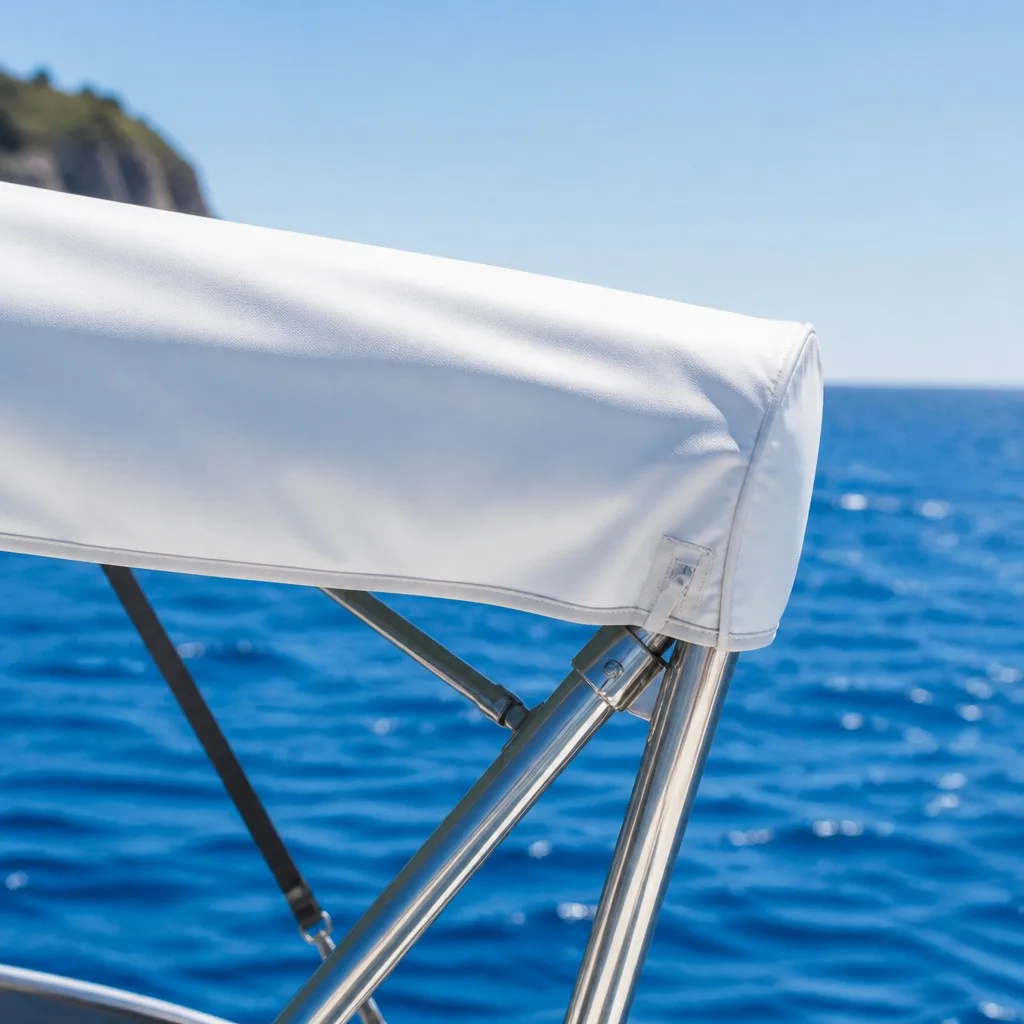
Most bimini damage happens off the water. A bimini left deployed through winter collects rain, snow, and ice; the weight stresses the frame and trapped moisture rots the canvas. The correct off-season protocol: clean and dry the canvas, treat metal fittings with a corrosion inhibitor, fold the frame per the manufacturer's procedure, and protect it. A bimini boot — a fitted canvas sleeve for the folded top — protects the fabric during the season. And a custom boat cover engineered to clear the folded bimini protects the whole boat through winter. See [Link to Article 62: Winterizing Your Boat] for the full checklist.
Repair or Replace: The Decision Guide
Minor issues are repairable: re-stitching a seam, replacing a zipper, patching a small tear, or re-coating with marine waterproofing treatment. Major issues are not: widespread cracking and brittleness, large delaminated areas, or rusted-through frames mean replacement. As a rule of thumb, if the fabric no longer sheds water after cleaning and re-treating, or if stitching fails faster than you can repair it, the canvas has reached the end of its UV life. At replacement time, consider upgrading to solution-dyed acrylic and investing in protection that makes the next canvas last twice as long.
Why Custom Bimini Covers and Boots Matter
Stock bimini boots and covers rarely match the exact geometry of your frame — the number of bows, the folded length, and the hardware height all vary by brand. A custom-fit cover from JK Covers is patterned around your actual bimini, so it fits snugly, stays on in wind, and never abrades the canvas. We manufacture them in UV-stabilized Oxford polyester with marine-grade zippers and strapping, and for OEM and ODM partners we can match fabric colors to the original canvas for a factory look. A custom boot and a custom cover are the two lowest-cost upgrades that most visibly extend the life of your shade.
Protecting biminis and marine canvas for your brand? JK Covers manufactures custom bimini covers, boots, and boat covers with OEM support. Contact us for pattern development and wholesale supply.
0users like this.