Marine & Watercraft Gear

Trailering Safely: Why You Need a Secure Highway-Grade Boat Cover
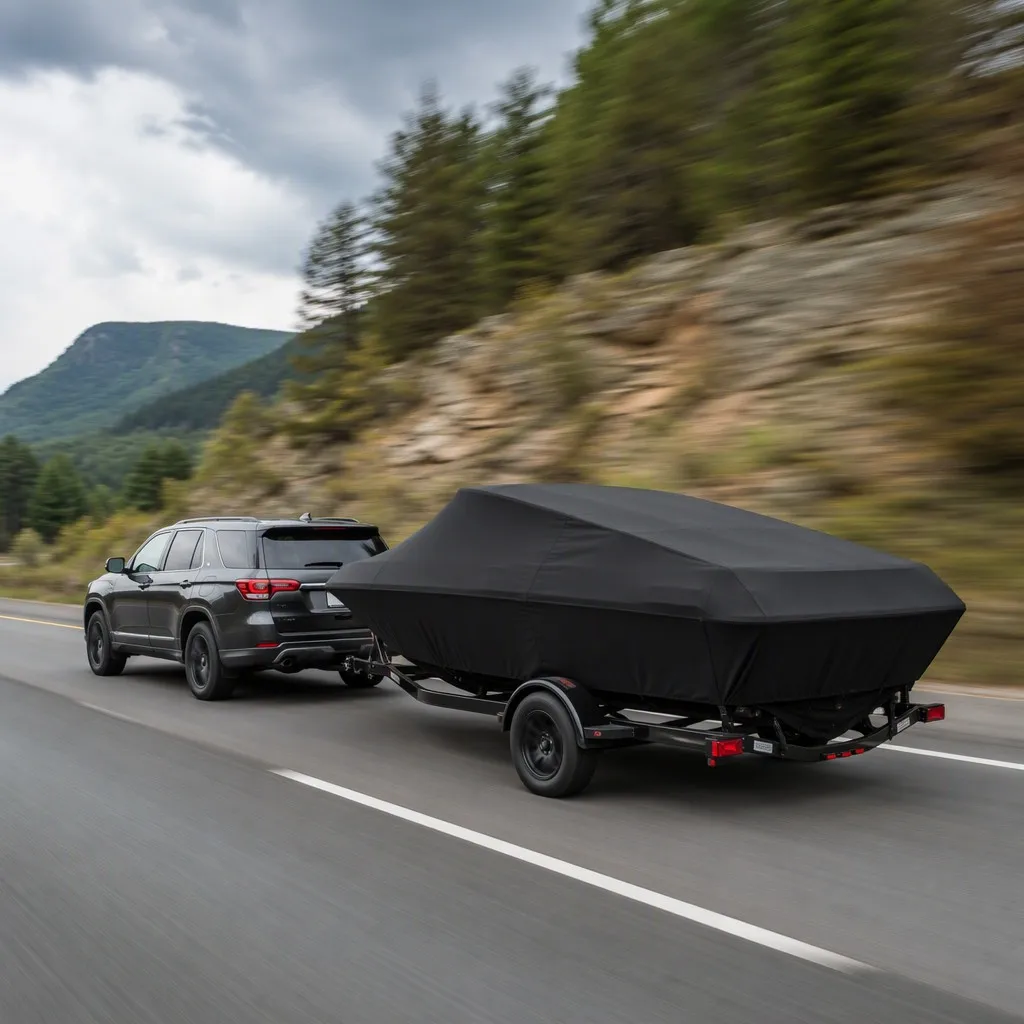
The Road Is Harder on Your Boat Than the Water
At 100 km/h on the highway, the air pressure on your boat's bow is not cosmetic — it is a physical load that flutters fabric, whips straps, and hammers the gelcoat with grit, bugs, and road spray. Add wind gusts from passing trucks, and an uncovered boat takes more abuse in six hours on the road than in a full season at the dock. That is why serious boaters do not trailer without a highway-grade cover. At JK Covers, we build trailering covers for OEM and retail brands — here is what highway-grade construction means and why it is a safety issue, not a cosmetics one.
What Highway Speed Does to an Uncovered Boat
Wind at speed does several destructive things. It flaps loose material — flapping fabric works like sandpaper against gelcoat. It lifts and vibrates panels, fatiguing hull joints and stressing windshield mounts. It hurls debris: road grit pits gelcoat, and insects leave acidic residue that etches the finish. And it loads the hull unevenly, pushing the bow and sides with forces that multiply with every gust. A cover absorbs all of this — if it is built and fitted to take the load.
Why a Mooring Cover Isn't a Trailer Cover
A mooring cover is built for static duty: shedding rain and blocking sun while the boat sits still. A trailering cover must handle dynamic loads at speed — a different design brief. Many owners trailer with a mooring cover and discover halfway home that it has torn loose or shredded at the bow. Use the right product for the job.
The Anatomy of a Highway-Grade Cover
When we engineer a trailering cover at JK Covers, every component is specified for highway duty:
- 900D Oxford polyester as the standard — the higher denier resists abrasion, flapping fatigue, and punctures far better than lighter fabric. See [Link to Article 55: 600D vs 900D Oxford Fabric] for the technical case.
- Padded bow protector: a reinforced, padded panel that shields the bow gelcoat from wind pressure and the bow stop.
- Reinforced tie-down system: heavy-duty webbing straps with padded, scratch-free buckles at the bow, stern, and sides — the straps carry the wind load, not the fabric.
- Tape-sealed, double-stitched seams so vibration cannot work open the needle holes.
- Air vents positioned to release pressure — wind can balloon a sealed cover and tear it from its moorings.
Fit, Again: The Highway Test
Fit is tested at speed. A trailering cover must sit smooth and taut with no billowing — loose panels catch wind and self-destruct. It must clear antennas and bimini hardware without stress points, and stay clear of wheels and exhaust near the stern. This is why custom-fit engineering matters most on the highway: a pattern built from your actual hull measurements, with the crown and tensioning designed for airflow, keeps the cover locked down at speed. See [Link to Article 65: Measuring for a Perfect Fit] for the protocol — and remember that trailering accessories change the geometry the cover must clear.
Strap and Tie-Down Best Practices
Even the best cover depends on correct strapping. Secure the bow strap through the trailer's bow eye and around the reinforced bow panel — the primary anchor against wind. Run side straps down to the trailer frame, not the fenders, and tighten evenly so the cover stays centered. Add a stern strap to prevent lifting at the transom. Never let a strap rub gelcoat — pad every contact point or route straps through the trailer's structure. Check tension after the first 30 minutes of driving; fabric stretches and straps settle.
Pre-Trip Inspection Checklist
Before every tow, run this five-point check: (1) cover is clean and dry — a wet cover abrades gelcoat at speed; (2) straps are tensioned and clear of paint, wheels, and exhaust; (3) the bow pad is positioned against the trailer bow stop; (4) vents are open; (5) antennas and accessories are removed or folded so nothing pokes through. Add the same routine to your trailer's own inspection — tires, bearings, lights, and safety chains — because no cover can fix a trailer failure.
For OEM and ODM Brands
Trailering covers are a high-warranty-risk category, which is why the brands we manufacture for demand highway-grade specifications: 900D fabric with verified tear strength and strapping systems that survive years of use. We build trailering programs with custom branding, packaging, and size runs matched to each OEM's model lineup. A cover that fails on the highway is not just a warranty claim — it is a safety incident waiting to happen.
Launching a trailering cover line? JK Covers engineers highway-grade covers in 900D Oxford with reinforced bow protection and OEM support. Contact us for samples and wholesale pricing.
0users like this.