Marine & Watercraft Gear

Jet Ski and PWC Protection: Shielding the Hull and Mechanics
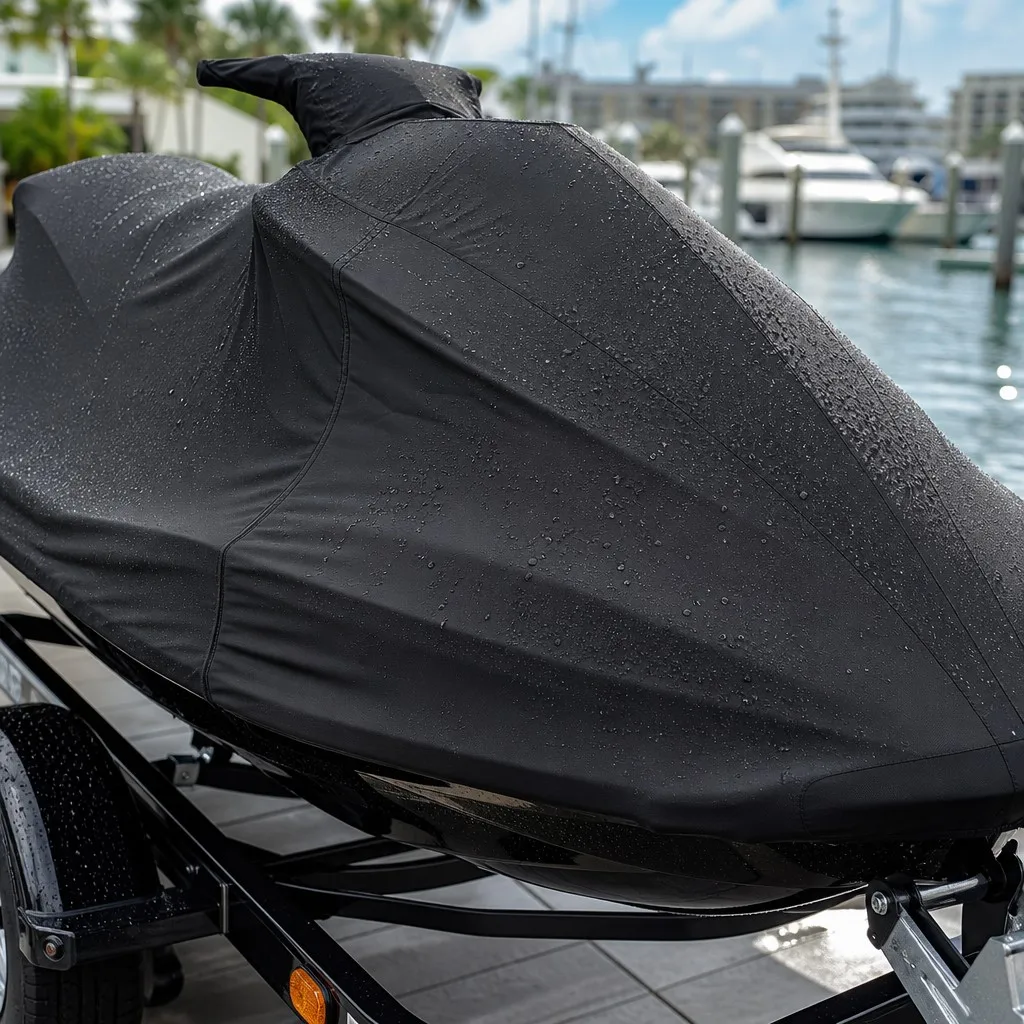
Small Craft, Big Exposure
A personal watercraft looks tough — a low, fast wedge of fiberglass. But beneath that silhouette is one of the most vulnerable machines on the water: thin gelcoat, long continuous seams of seat vinyl, a dash packed with electronics, and an engine bay that sits inches above the waterline. A jet ski docked or trailered through a full season of sun and salt takes a beating that would trouble a much larger boat. At JK Covers, we manufacture custom-fit PWC covers for OEM and retail brands, and the math is simple: the hull and mechanics cost thousands; the cover costs less than one gelcoat repair. This guide explains what goes wrong — and how the right cover stops it before it starts.
What a Season of Sun and Salt Actually Does
Walk a marina in late summer and look at the PWC lineup: chalky, faded gelcoat on the deck; cracked, stiff seat vinyl on the older machines; white corrosion crust on every unpainted fastener. UV radiation and salt air work together — the sun degrades the surface, and salt-laden moisture accelerates every chemical reaction while it is at it. Once gelcoat oxidizes, it turns chalky and dull; restoring it requires compounding that removes material. Once vinyl cracks, the only fix is reupholstery. Both are preventable with consistent covering.
Hull and Gelcoat: The Visible Damage
The deck and hull of a PWC are exposed from every angle — the top deck takes direct sun all day, the lower hull takes dock rash, trailer bunks, and spray. UV-stabilized gelcoat still fades and micro-cracks after years of exposure; a cover blocks the UV before it reaches the surface and stops the abrasion from ropes, fenders, and flapping tarps. A properly fitted PWC cover is snug by design — it does not move against the hull, so it cannot sand the gelcoat. That is why we build PWC covers from soft-lined 600D Oxford polyester: waterproof shell stops weather, inner liner protects the finish.
The Mechanical Threat Underneath
Saltwater corrosion is not just cosmetic. A PWC engine bay is a confined, humid environment where aluminum blocks, steel fasteners, and connectors are constantly exposed to salt-laden air — see [Link to Article 66: Saltwater Corrosion] for the full chemistry. A cover cannot dry the bilge for you, but it stops the daily deposition of fresh salt spray, and its air vents let trapped humidity escape instead of condensing on the engine. That, plus a freshwater rinse of the engine bay after each saltwater ride, is the maintenance formula every PWC technician recommends.
Cover Design for PWC: Snug by Design
A jet ski cover has a unique job: it must hug a shape with mirrors, a steering column, a seat hump, and a grab handle, and it must stay on at highway speed. Our PWC patterns use a tailored cut that follows the silhouette, with an elastic hem that seals around the hull and a tie-down strap system that anchors the cover during trailering. Key design details matter: reinforced corners at the rear grab handle, a padded section where the cover bears on the seat, and a waterproof zippered access panel so you can reach the tow hook or fuel cap without stripping the whole cover. These are the details we engineer into OEM programs — a cover that fits badly is worse than no cover at all.
Trailer Covers vs. Storage Covers
Match the cover to the duty. For long-term storage, choose a vented, breathable cover that prevents condensation. For trailering, choose a heavier build with reinforced webbing, ratchet or buckle straps, and a tighter hem — see [Link to Article 68: Trailering Safely] for highway-grade requirements.
Choosing the Fabric: 600D Marine Oxford Standard
For PWCs, 600D Oxford polyester with a waterproof PU coating is the industry workhorse — heavy enough to shrug off wind and abrasion, light enough to fold and stow in the storage compartment. For machines stored outdoors year-round in high-UV or storm regions, step up to 900D Oxford with tape-sealed seams. Look for UV-stabilized yarns, mildew-resistant backing, and marine-grade stitching thread — see [Link to Article 55: 600D vs 900D Oxford Fabric] for the technical comparison.
A Simple PWC Care Checklist
- Rinse: Freshwater rinse of hull and engine bay after every saltwater ride.
- Dry: Let the machine dry, then cover it — never cover a wet PWC.
- Treat: Apply UV protectant to seat vinyl monthly during the season.
- Inspect: Check cover seams, straps, and vents before every trailering trip.
- Store: Keep the cover on whenever the machine is parked — even for a weekend.
Building a PWC cover line? JK Covers manufactures custom-fit jet ski covers in 600D and 900D Oxford with OEM branding support. Contact us for wholesale pricing.
0users like this.